Wine o'clock alternatives work when they keep the cue and the routine and swap only the substance. I tested five at 5 PM for 30 days each. Only two were still in my evenings ninety days later.
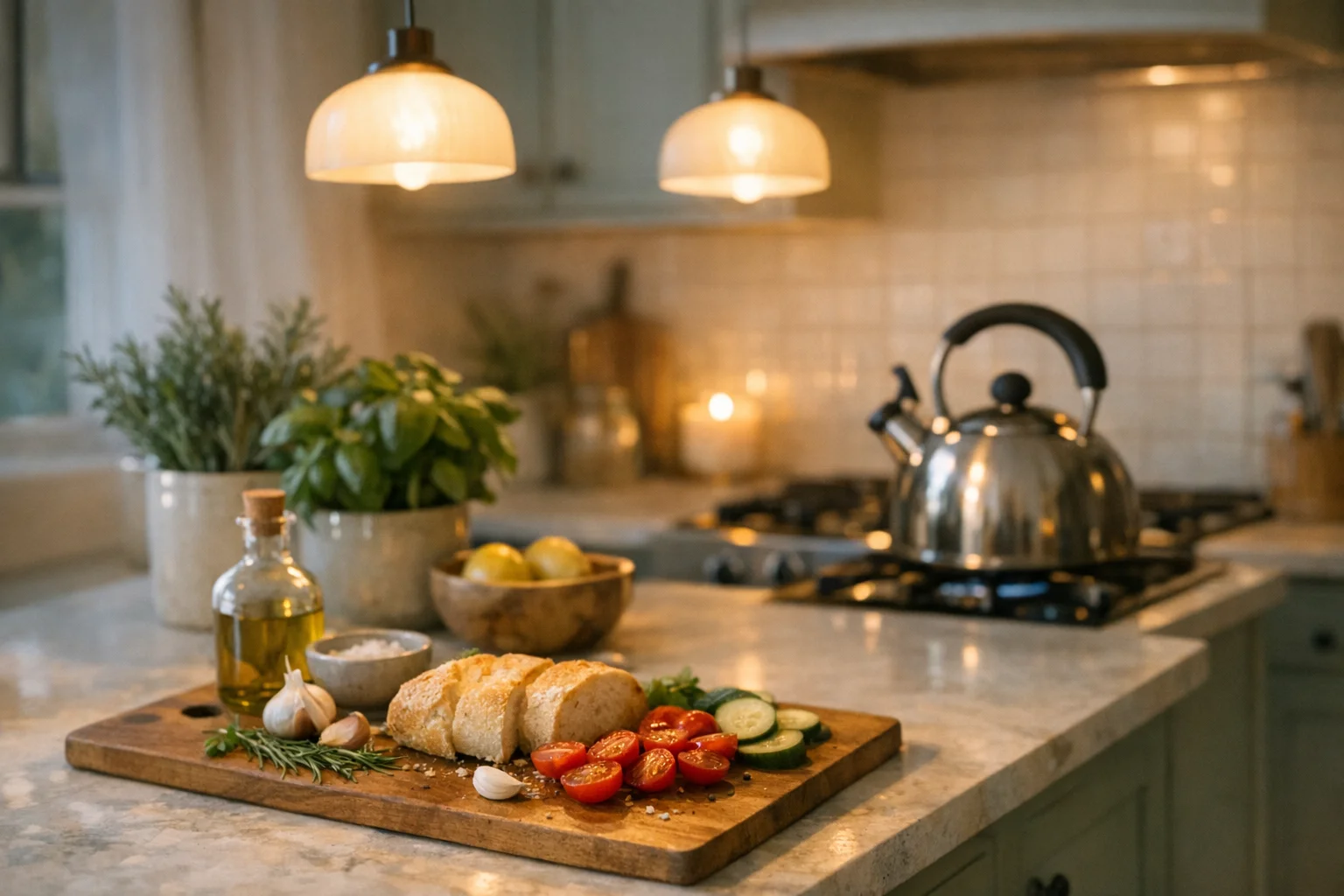
There is a moment at 5:48 PM in my kitchen where the pour happens almost before I have noticed I am deciding. Two kids in the living room, dinner half-prepped on the counter, the cookbook open. My hand has already moved toward the wine fridge a few times before any conscious choice has arrived. That hand was what I wanted to slow down. Quitting was never the goal. The goal was understanding the 5 PM minute well enough to stand inside it without being moved by it.
What Wine O'Clock Alternatives Actually Have to Replace
Wine o'clock is not a time of day. It is a cue. The 5 PM kitchen stacks several conditions at once: late-afternoon cortisol, a caregiving handoff from school pickup through dinner, sensory load peaking at the same hour, and a long history of pairing that window with the first pour. The brain reads the stack as a signal.
Volkow and colleagues' 2007 PET imaging study in The Journal of Neuroscience documented that chronic drinkers show profoundly blunted dopamine release in the striatum, and that the reward system runs on prediction. By the time the cue arrives, the brain is already anticipating the substance. The craving is a response to the cue, not the wine.
Kumar and colleagues' 2009 review in Psychopharmacology shows that chronic nightly drinking changes GABA-A receptor configuration over time. The same pour does less. Becker's 2014 chapter in the Handbook of Clinical Neurology walks through the cost: when the expected pour is missing, inhibitory signaling under-functions while excitatory signaling keeps firing. The body reads the absence at exactly the cue time.
The job was not to white-knuckle the cue. It was to give it something to land on.
The Test: 30 Days Each, 5 PM Window
Five rituals. Thirty days per ritual. Same 5 PM start, no exceptions. I tracked five things in a notebook on the counter: a craving score at the cue, whether the pour was avoided, evening mood at 8 PM, morning anxiety at 7 AM, and a yes-or-no on whether the ritual was still active at day 60 and day 90. Retention was the metric that mattered most. The results below include the two that stuck, the one I rotated for specific nights, and the two that did not survive the test.
Ritual 1: The Sparkling Water Ceremony
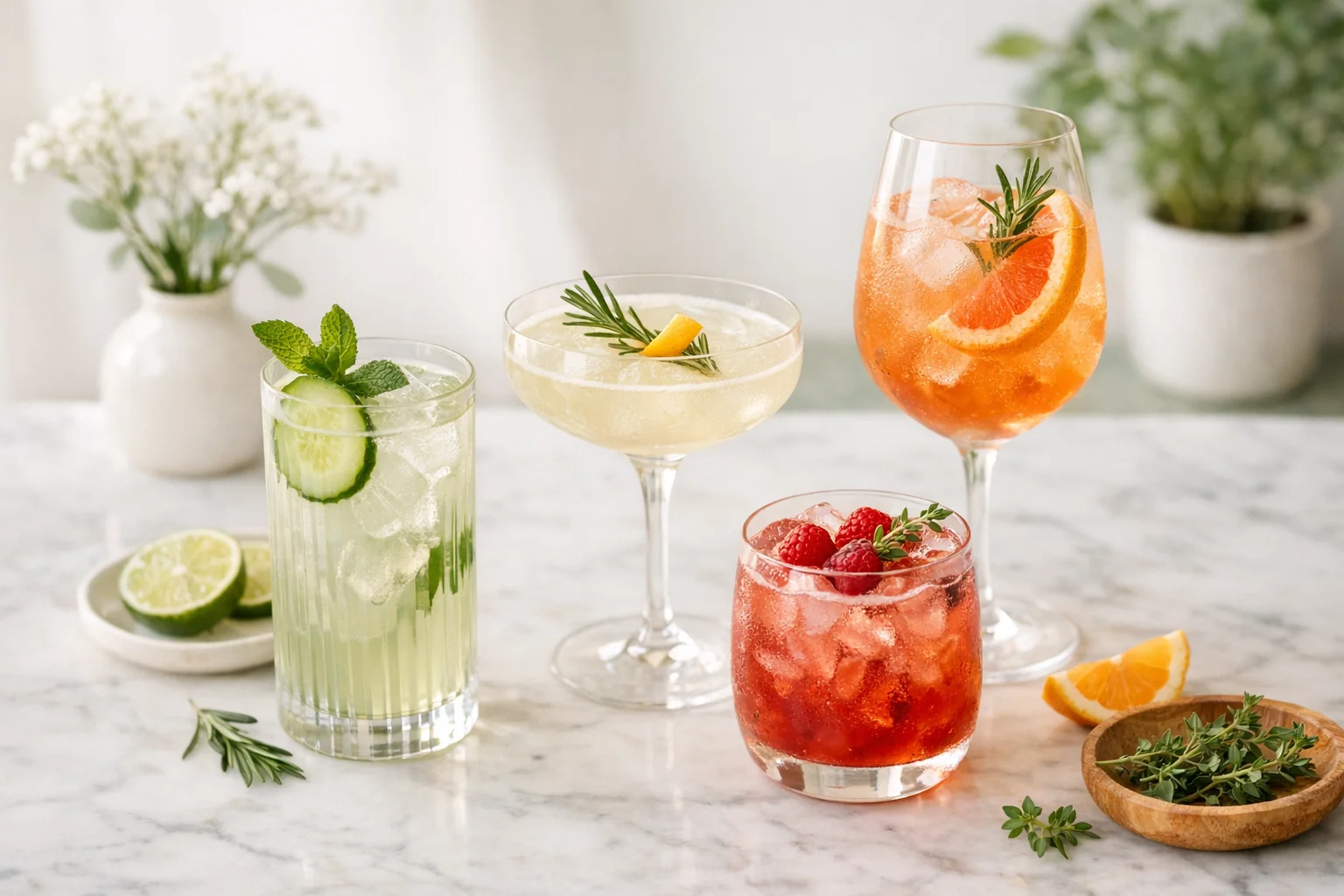
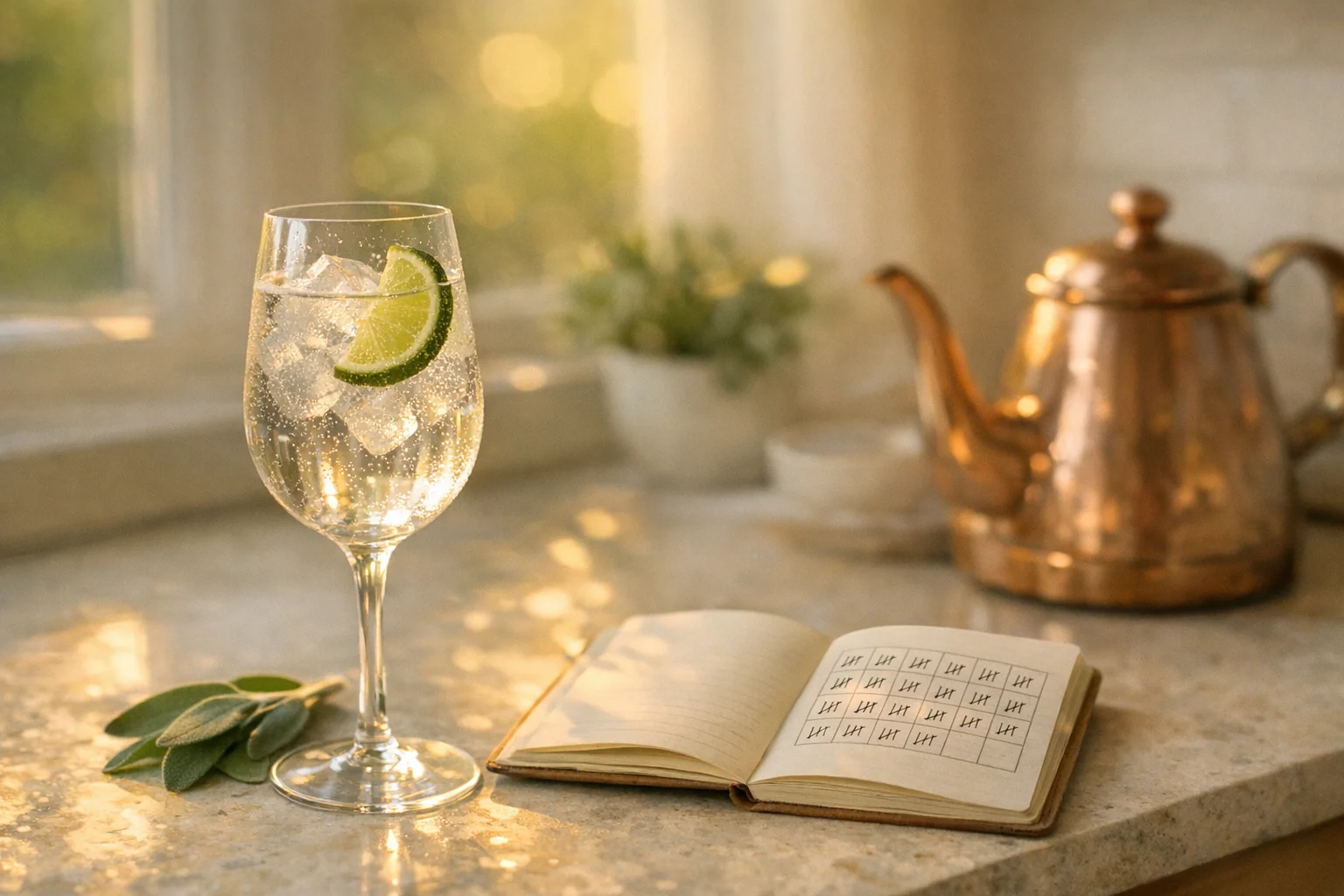
A real wine glass, ice, a wedge of lime or a slice of cucumber, sparkling water poured the same way I would have poured a Tuesday cabernet. Same time, same glass, same hand motion.
The first week was harder than I expected. The cue was so embedded that the wrong taste in the right glass produced a small protest. By day eight the protest had quieted. By day fourteen the ritual was self-sustaining, and by day twenty I was reaching for the glass at 4:55 without consulting myself.
Day 90 verdict: stuck. The glass and the ice and the pour at exactly the right minute matter more than the contents. The brain reads the routine and the cue, and the substance is the variable I get to choose. The non-alcoholic drinks worth pouring into the real glass sits adjacent for the longer list.
Ritual 2: The Sunset Walk
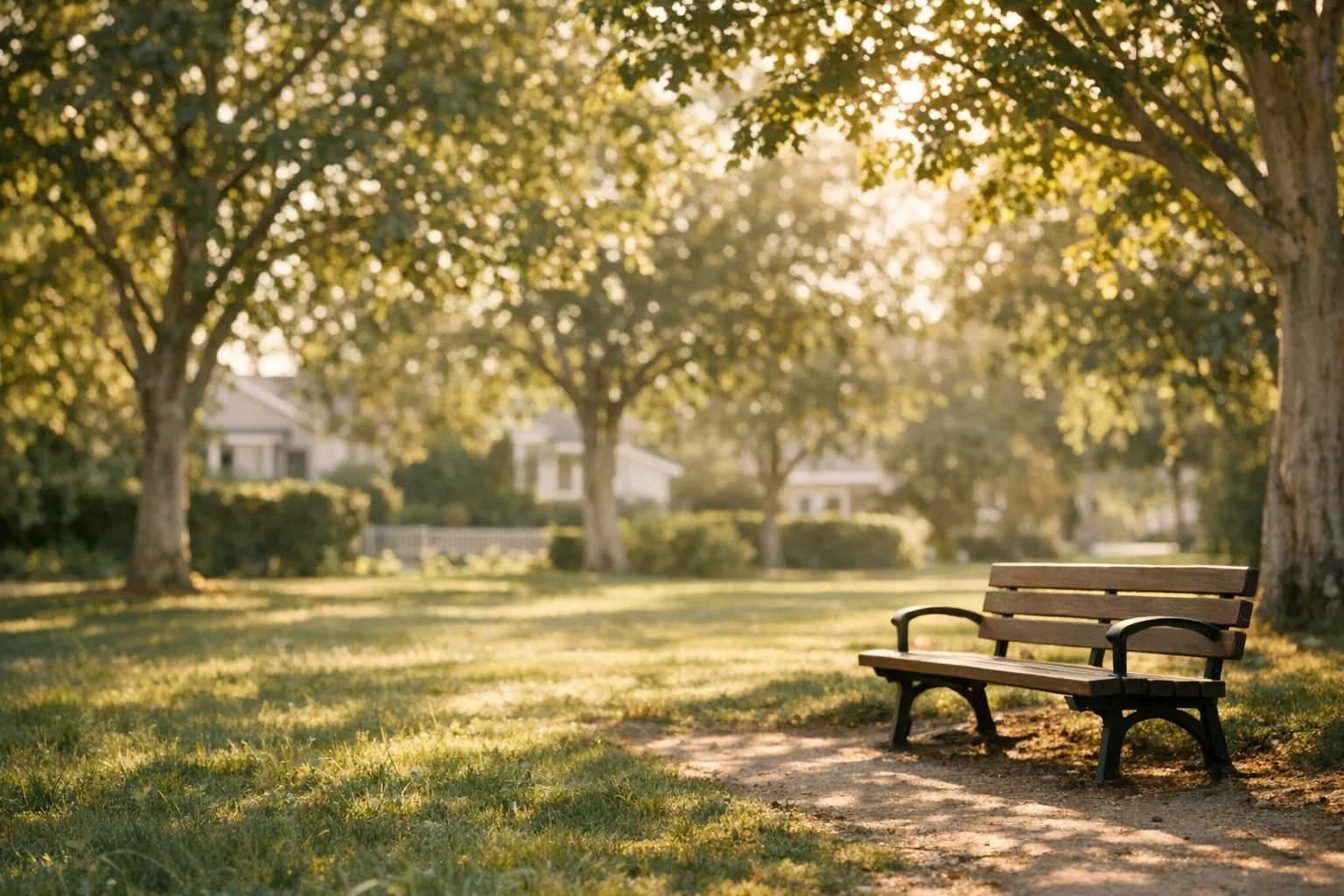
Fifteen to thirty minutes outside, starting at 5 PM, regardless of weather. No phone calls. No podcast for the first half. The point was the light.
Days one through seven were the worst. Leaving the kitchen at the exact hour of maximum need felt impossible. By day ten I had worked out the geometry of getting kids settled with a snack and a show before I went out, and after that the walk was non-negotiable. By the third week, my feet were moving toward the shoes at 4:55.
Day 90 verdict: stuck. The walk works because it solves both ends of the loop at once. Movement and natural light bring cortisol down within minutes, and the reward system gets a dopamine hit from the change of scene rather than from a substance. Both legs of cue-routine-reward are addressed at the same minute the cue arrives.
Ritual 3: The Locked-Door Bath
Thirty minutes, hot water, a podcast on, the door locked. The locked door was load-bearing. Without it, the bath was an interruption. With it, it was a perimeter.
Week one exposed the problem. On nights when both kids were melting down, the locked door was not a perimeter, it was a provocation. On nights when one was on homework and the other was already eating, the bath was an oasis. The ritual asked for conditions that were not always available.
Day 90 verdict: rotated, not stuck. It works on Sunday nights when the household is calmer, and on the rare weekday when everyone has settled by 5. It does not work as the daily default. Asking a single ritual to carry the worst hour every night is asking too much of any one swap.
Ritual 4: NA Wine in a Real Wine Glass
This one surprised me. The first two weeks were the smoothest of any ritual on the list. Real wine glass, cold, a pour that looked and smelled and tasted close enough that the part of my brain expecting an evening drink was satisfied.
Around day fifteen something shifted. The smell that had been satisfying started priming a craving for the real thing. By day twenty-one the NA wine was triggering full reaches for the cabernet. By day thirty I had given the bottle to a friend.
Day 90 verdict: flopped, for me specifically. The brain was reading smell and glass as the full setup, and the gap between what the body expected and what it was getting became its own cue. Friends of mine find the opposite and keep NA bottles in the fridge for years without trouble. The morning-after physiology I was trying to avoid is what made the trigger especially uncomfortable when it arrived.
Ritual 5: The 10-Minute Body-Question Journal
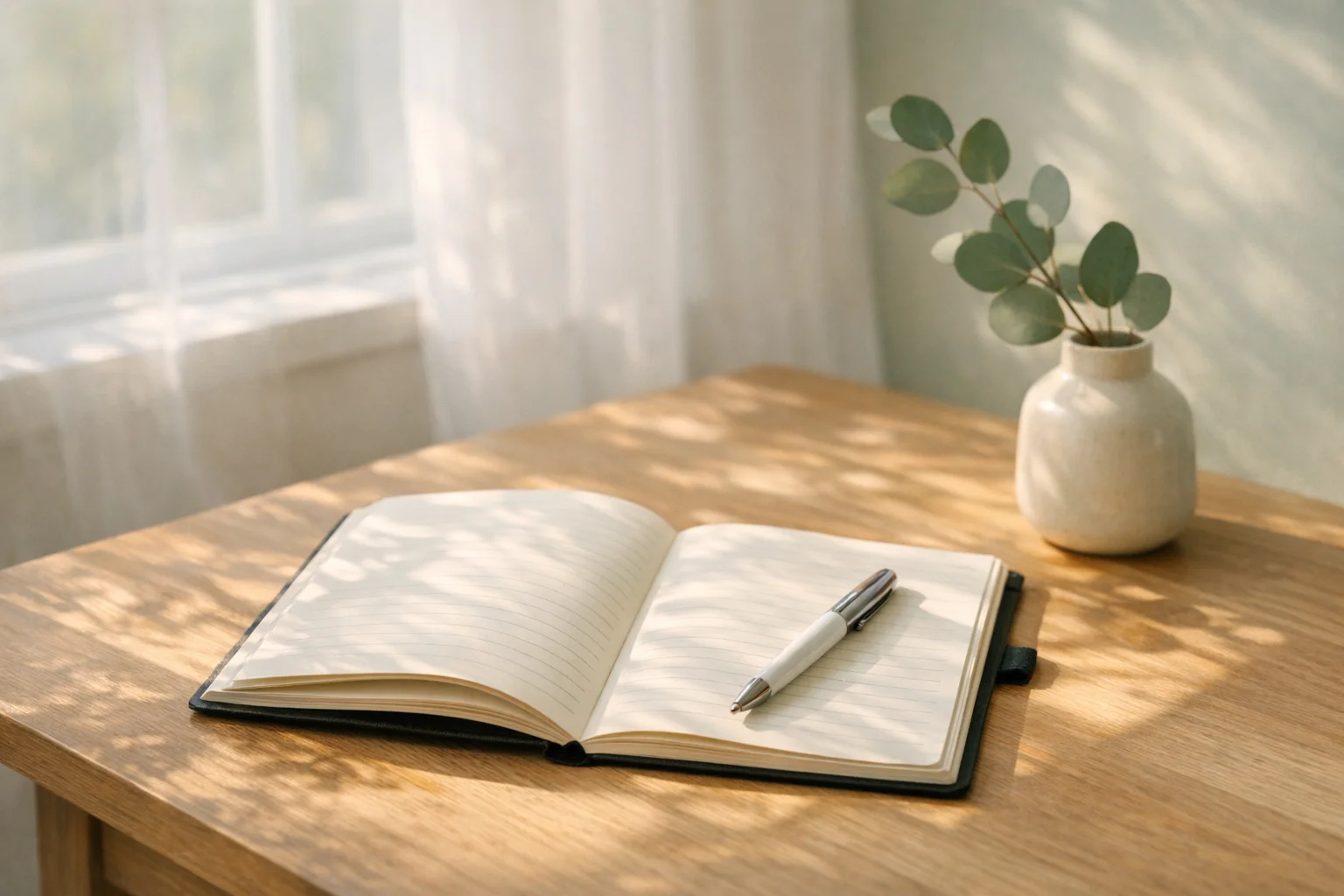
One prompt, written in pen, every evening at 5: what was the loudest thing in my body today? The first week was full of small revelations. Tightness in my jaw. A tension in my right shoulder. Hunger I had not noticed.
By the second week the prompt felt like homework. By the third week I was finding excuses. By day twenty-five I had stopped opening the notebook.
Day 90 verdict: flopped. The 5 PM hour is when I am most depleted, not most reflective. Asking myself to introspect at the exact minute I had been using a substance to stop introspecting was the wrong direction. Journaling has a place in my routine. That place is not 5 PM. I moved it to mornings and there it works fine. The thirty-day arc of how the brain settles after a sustained change is the longer arc this kind of test sits inside.
What Stuck, What Flopped, and Why
Two of the five rituals were still in my routine ninety days later. One was rotated. Two had fallen off entirely.
The pattern in the surviving rituals was clean: the cue and the routine stayed intact, and only the substance changed. Sparkling water replaced wine in the same glass at the same time. The sunset walk substituted movement and light for the wine's reward signal at exactly the cue minute. The two that flopped asked too much of the worst hour. NA wine triggered the original craving once the gap between expectation and delivery became a signal of its own. Journaling demanded reflection at a moment built for depletion. By week three, the rituals that stuck were carrying themselves. My body was reaching for the glass or the shoes without consulting me.
Reframe was the app I had been working through alongside this whole experiment. The daily lessons cover GABA, dopamine, and the habit loop, and that material is what taught me to think about the 5 PM minute as a designable structure instead of a willpower problem. It is one option among several, and its self-reported outcome statistics are not peer-reviewed. SMART Recovery offers free CBT-anchored peer meetings online and in person. Annie Grace's Alcohol Experiment is a free 30-day cognitive-reappraisal program that pairs naturally with this kind of testing. Individual therapy with a qualified clinician is always a legitimate door. What worked for me may not work for you.
I write The Clear Mom because the 5 PM cue is the most under-discussed minute in a mother's day. The list of five rituals is not the answer. The answer is knowing the cue is real, the routine is replaceable, and some swaps will flop. The flop is information. The longer list of things that help more than wine at 6 PM sits next to this one, and the first stretch I quit one daily ritual entirely is the earlier piece this 30-day testing grew out of.
This post is written from personal experience and cites peer-reviewed research. It is not medical advice. If you're concerned about your drinking or your health, please speak with a qualified clinician.